

Rock Salt vs. Calcium Chloride vs. Brine: Which Ice Melt Should You Use?
Why Your De-Icer Choice Matters More Than the Price Tag
If you live in Western New York, you know the first hard freeze usually beats the first plowable snow, and that's exactly when most homeowners grab whatever bag of ice melt is on sale that week. But rock salt, calcium chloride, magnesium chloride and liquid brine really aren't interchangeable. Each one melts ice at its own temperature and speed, and each treats your concrete, pavers, pets and lawn a little differently.
So here's a plain-English comparison to help you pick the right product for your driveway and walkways this winter. And if you'd rather hand the whole decision off to someone else, our team takes care of product choice and application for you as part of our salting services.
Where Most Homeowners Go Wrong
- Rock salt is the cheapest and most common option. It works well down to about 15°F, and the paver industry calls it the least damaging de-icer for concrete materials. It's harder on lawns and metal.
- Calcium chloride works the fastest and the coldest, down to about −20°F. Use it sparingly, especially around pets and plants.
- Magnesium chloride works down to about 5°F and shows up in many "pet-friendly" blends, but paver manufacturers recommend keeping it off concrete pavers.
- Liquid brine isn't for melting ice that's already there. It's sprayed before a storm so snow and ice can't bond to the pavement, which means less salt overall.
How They Compare
| Product | Works down to (approx.) | Speed | Concrete & pavers | Pets | Lawns & plants |
|---|---|---|---|---|---|
| Rock salt (sodium chloride) | 15°F | Moderate | Least damaging option per the paver industry; can still cause surface scaling | Can irritate paws and upset stomachs | Sodium builds up in soil along edges |
| Calcium chloride | −20°F | Fastest | Acceptable in small amounts | Linked to mouth irritation if eaten | Harmful if over-applied |
| Magnesium chloride | 5°F | Moderate | Not recommended on concrete pavers | Often in pet-friendly blends; still not risk-free | Generally gentler at normal rates |
| Salt brine (pre-treatment) | Prevents bonding; brine itself freezes near 0°F | Applied before snow | Uses far less salt overall | Less residue tracked inside | Less salt reaching soil |
Temperatures are practical working ranges, not lab limits. Products melt slower as pavement gets colder.
Rock Salt (Sodium Chloride)
Rock salt is what most hardware stores stack right by the door, and there's a reason for that: it's inexpensive, easy to spread, and does the job on most Western New York winter days. At 30°F, a single pound of salt can melt about 46 pounds of ice in just five minutes. Drop the temperature to 15°F, though, and that same pound only melts about 6 pounds of ice in an hour. Go colder than that, and dry rock salt mostly just sits there doing nothing. The downsides show up over time. Sodium that gets plowed or shoveled onto the grass builds up in the soil and can leave brown strips along your driveway by spring. Salt also speeds up rust on car undercarriages, railings, and metal door frames.
Best for: everyday ice control on driveways and walkways when temperatures are in the 15–32°F range.
Calcium Chloride
Calcium chloride is the cold-weather workhorse of the bunch. It gives off heat as it dissolves, so it starts working almost immediately and keeps going down to about −20°F, exactly what you need during the arctic snaps that follow a lake-effect band. Because it's so strong, a little goes a long way. Over-applying it can harm plants and leave a slick residue behind, and the ASPCA notes that calcium chloride products can irritate a pet's mouth if they lick or eat them.
Best for: very cold days, stubborn ice on steps, and blending with rock salt to boost its performance.
Magnesium Chloride
Magnesium chloride sits in the middle of the pack. It works down to about 5°F and is commonly sold as a gentler, "pet-friendly" or "plant-friendly" product. The ASPCA says magnesium chloride and urea-based products are generally safer for pets than other salts, though they can still cause stomach upset. The catch is hardscaping. The Concrete Masonry & Hardscapes Association advises against using magnesium chloride on interlocking pavers because it can chemically degrade the concrete. So if you have a paver patio or walkway, this isn't the product for you.
Best for: plain asphalt areas where pets spend time, as long as there are no concrete pavers nearby.
Salt Brine: Stopping Ice before It Starts
Brine is just salt dissolved in water, usually at about 23% salt. Rather than melting ice after it forms, it's sprayed on pavement before a storm so snow and ice never get the chance to bond to the surface. That makes plowing and shoveling much easier once the storm passes.
The University of Connecticut's Green Snow Pro program has found this kind of anti-icing can be more than 50% more efficient than spreading salt after the fact. It's typically applied one to two hours before snow starts, or up to a few days ahead, though it isn't a good fit when a storm starts as rain, since the rain simply washes it away. Brine takes a sprayer and some planning, which is why it's mostly used by commercial crews on parking lots and long drives. If you manage a business property, it's worth asking your contractor whether pre-treatment is part of their commercial lot snow removal plan.
What's Safe for Concrete and Pavers?
Every de-icer can contribute to surface scaling, where thin flakes pop off concrete after repeated freeze-thaw cycles. A few simple rules go a long way toward keeping that damage in check:
- Skip de-icers on new concrete. The Portland Cement Association recommends waiting at least three months after concrete is poured, and longer if it was poured in fall. If you had a driveway or walkway done this year, use sand for traction instead.
- Stick with rock salt on pavers. The Concrete Masonry & Hardscapes Association calls rock salt the least damaging de-icer for concrete materials, with calcium chloride as an occasional backup. It recommends against magnesium chloride and calcium magnesium acetate (CMA) on pavers.
- Don't over-apply. More product doesn't melt ice faster. It just leaves more residue to soak into the surface.
Keeping Pets and Lawns Safe
No ice melt is completely pet-safe, no matter what the bag claims. The ASPCA recommends wiping your pet's paws with a damp cloth as soon as they come inside, keeping them from eating slushy snow, and using booties or paw wax if their pads start to crack. It's also worth storing the bags somewhere your pets can't reach. For lawns and garden beds, the biggest problem is salt-heavy snow piled right onto the grass. Try to pile snow where the meltwater drains away from beds, and avoid tossing de-icer near the edges of the lawn. Come spring, a good watering will help flush the salt back out of the soil.
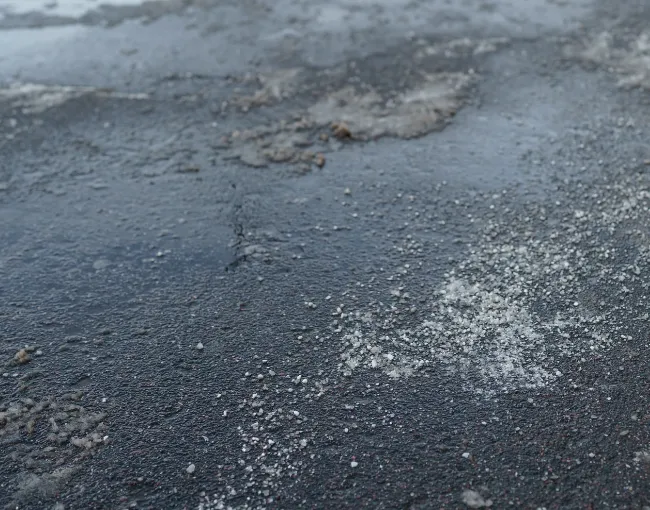
Which Ice Melt Is Right for Your Property?
Most Western New York properties don't need just one product for every situation. Here's how to match the de-icer to the surface and the forecast:
- Asphalt driveway, no pets: Rock salt for most of the winter, with a bag of calcium chloride or a blend on hand for nights below 15°F.
- Paver patio, walkway or steps: Rock salt, used lightly, and shovel the slush off quickly. Skip magnesium chloride and CMA.
- Concrete poured this year: No de-icer at all this winter. Shovel early and often, and use sand for grip.
- Homes with dogs: A magnesium chloride or urea blend on the paths your pet uses, as long as those paths aren't pavers. Wipe paws after every walk.
- Parking lots and long drives: Brine before the storm, then salt or a treated blend during cleanup. This is where a commercial crew with the right equipment saves the most time and product.
Whatever you choose, the biggest difference always comes down to clearing snow before it packs down. De-icer works best on a thin layer, not on six inches of lake-effect snow.
Frequently Asked Questions
Is calcium chloride better than rock salt? It works faster and in much colder weather, down to about −20°F compared with about 15°F for rock salt. Rock salt is cheaper and gentler on concrete pavers, so many people use rock salt most of the time and keep calcium chloride for the coldest days.
How cold is too cold for rock salt? Below about 15°F, dry rock salt works very slowly. At that point, switch to calcium chloride or a blend that contains it.
What's the best ice melt for pavers? Rock salt, used sparingly. The paver industry recommends avoiding magnesium chloride and CMA on concrete pavers.
Is any ice melt truly pet-safe? No. Products labeled pet-friendly are generally gentler, but they can still upset a pet's stomach. Wipe paws after walks and keep pets from eating treated snow.
Can I put ice melt on a new driveway? Not for at least the first three months, and longer if the concrete was poured in fall. Use sand for traction instead.

Let a Pro Handle the Ice This Winter
Picking the right product is only half the job. Timing it to the storm, spreading the right amount, and clearing the slush before it refreezes is what really keeps a driveway or lot safe through a Western New York winter. CSA Landscaping & Plowing pairs driveway snow removal and commercial plowing with professional salting services, matched to your surfaces and the forecast. Not sure when to book? Here's our guide on when to schedule snow plowing in Western New York. Then give us a call for a free quote before the first big storm hits.
Tuesday 8AM-9PM
Wednsday 8AM-9PM
Thursday 8AM-9PM
Friday 8AM-9PM
Saturday 8AM-9PM
Sunday 8AM-9PM
